Why Arts Nonprofits Are Swapping Software Subscriptions for Fractional Analytics Teams
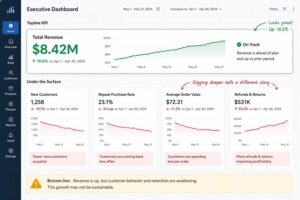
For most arts nonprofits, the story goes something like this: you sign up for a shiny new dashboard tool after a board member mentions it at a meeting. Twelve months later, you're paying $400/month for a platform that three people have logged into — and none of them know how to build a report that your executive director will actually trust.
You're not alone. Across the cultural sector — from regional theaters to community museums — arts organizations are quietly coming to the same realization: the problem was never a lack of software. It was a lack of strategy, capacity, and human expertise.
That's exactly why a growing number of mission-driven organizations are making a different choice: partnering with fractional analytics teams instead — and seeing real mission impact as a result.
The Software Subscription Trap
The nonprofit technology market has exploded over the past decade. There are now platforms for every conceivable data need — ticketing, donor management, event analytics, audience segmentation, survey tools, and more. The pitch is always the same: "just connect your data sources and the insights will follow."
In practice, arts organizations face a very different reality. Staff are stretched thin. Development directors are writing grants, not running queries. Marketing teams are managing campaigns, not building KPI dashboards. And when a funder asks for a three-year attendance trend by zip code, nobody knows where to start — let alone whether the data meets grant compliance requirements.
The result? A graveyard of half-built dashboards, disconnected spreadsheets, and quarterly reports that tell leadership almost nothing actionable. Meanwhile, subscription fees keep renewing on autopilot.
"We had three different platforms pulling attendance data — and three different answers for the same question. Our board had stopped trusting any of them."
— Development Director, Regional Arts CouncilWhat a Fractional Analytics Team Actually Does
The fractional model is simple: instead of hiring a full-time data analyst (or paying for tools your team won't use), you engage a specialized team on a part-time or project basis — getting senior-level analytics expertise at a fraction of the cost.
But what does that look like in practice for an arts organization?
The software-only approach
- Multiple disconnected platforms with no single source of truth
- Staff time lost to data cleaning & reconciliation
- Reports that sit in inboxes, unused
- Renewals for tools nobody champions internally
- Funder reports built manually in Excel, every time
The fractional analytics approach
- One unified data layer — consistent numbers, always
- Automated pipelines that clean and deliver data
- Dashboards built around decisions your leadership actually makes
- Proactive analysis that surfaces insights before you ask
- Funder & board reports delivered on schedule, automatically
Why Arts & Cultural Organizations Are a Perfect Fit
Arts nonprofits face a genuinely unique data landscape. Ticketing comes from one platform. Donations come from another. Workshop attendance is tracked in spreadsheets. Educational program data lives in a third system. And grant reporting requires pulling from all of them — often with 48 hours' notice.
What makes the fractional model work so well for this sector is precisely that complexity. A dedicated analytics partner learns your data ecosystem deeply — your ticket platforms, your CRM (whether that's Tessitura, Blackbaud, or PatronManager), your program databases — and builds infrastructure with proper data governance that makes that complexity invisible to your team.
At Rila Group, we've worked with organizations like El Museo del Barrio to build reporting systems that turn hours of manual work into automated, on-demand insights. The result isn't just efficiency — it's organizational confidence in your own data.
"When your board asks a tough question at the wrong moment, the answer should never be 'we'll have to get back to you.' That's a solvable problem."
— Rila Group Inc.What Rila Group Brings to Arts Organizations
We're a Tampa-based, MBE-certified data analytics and business intelligence consultancy. We specialize in working with nonprofits, arts organizations, and educational institutions — and we've designed our service model specifically around the rhythms and constraints of mission-driven work.
Dashboard & Reporting Systems
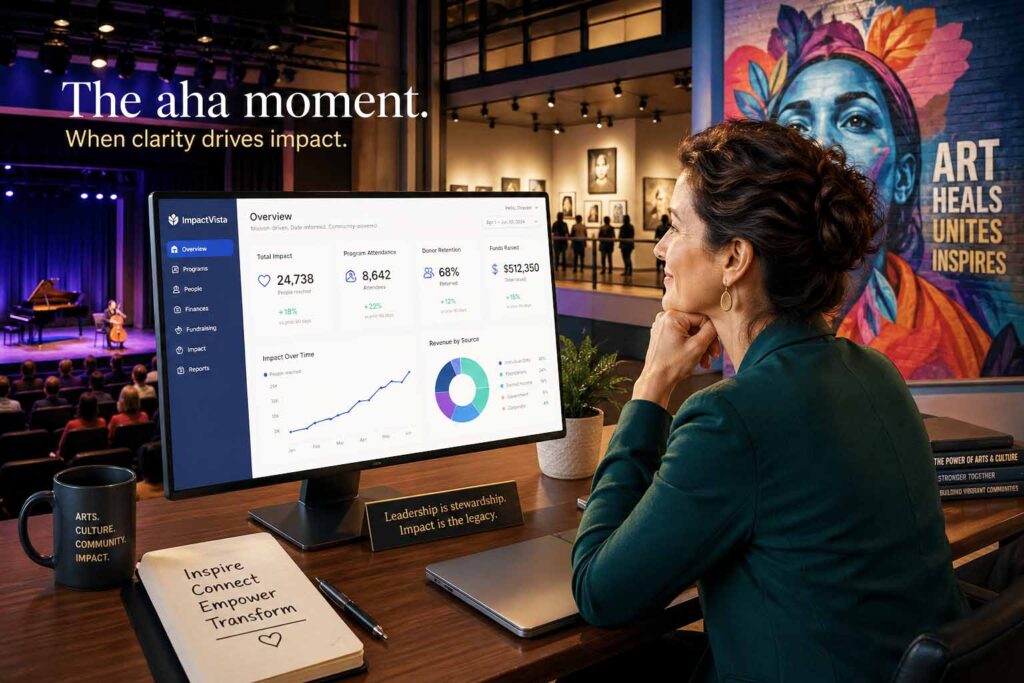
Live, role-specific dashboards your executive team and program staff will actually open — built for how your organization works, not how a software vendor imagined it.
Automated Data Pipelines
Connect your ticketing, CRM, and program data into a single, clean source of truth — eliminating the manual reconciliation that costs your team hours every month.
Funder & Board Reporting
Grant impact reports, board performance packages, and funder deliverables — designed to impress and built to update themselves when the numbers change. Pair this with predictive analytics for donor retention to give your development team a true edge.
Audience & Program Analytics
Understand who's attending, who's giving, and who's not coming back — with segmentation and trend analysis that informs programming, marketing, and development strategy.
The Economics Actually Work
Here's a number worth sitting with: the average arts organization we speak with is paying between $8,000 and $15,000 per year on analytics software subscriptions that aren't driving decisions. A fractional analytics engagement through Rila Group typically costs less — and delivers a human partner who understands your mission, attends your planning meetings, and builds infrastructure that compounds in value over time.
You're not renting access to a feature set. You're building organizational capacity.
For organizations that can't yet justify — or don't yet need — a full-time data hire, the fractional model offers something genuinely valuable: senior-level expertise, on demand, without the overhead. If you're managing a team of 10 to 100 staff, our guide to nonprofit data strategy for mid-sized teams is a good place to start.
A Different Kind of Partner
We're not a software vendor. We don't have a platform to sell you. Our only incentive is to make your data work harder for your mission — which means we'll sometimes tell you to cancel a subscription, consolidate tools, or simplify your stack rather than add complexity.
That independence matters. So does sector experience. We understand the pressure of grant cycles, the complexity of grant compliance reporting, earned vs. contributed revenue tracking, and what key performance indicators your board actually needs to see at a quarterly meeting.
If you're an arts or cultural organization that has been burned by software promises before, we'd like to show you what a different kind of analytics partnership looks like.
Ready to make your data actually work?
Frequently Asked Questions
Fractional analytics engagements for nonprofits typically range from $1,500 to $5,000 per month depending on scope — significantly less than the $80,000–$110,000 fully-loaded cost of a full-time data analyst hire. Most arts organizations also reduce or eliminate SaaS subscription costs that were going unused, making the net investment even lower. Rila Group offers phased engagements designed to fit nonprofit budget cycles and grant timelines.
SaaS platforms give you a tool; managed analytics gives you answers. For nonprofits with limited internal data capacity, SaaS tools often go underutilized because staff lack the time or expertise to build reliable reports. A managed fractional analytics team handles data governance, CRM integration, KPI tracking, and grant compliance reporting — delivering the insights directly rather than expecting your team to produce them.
Yes. Rila Group is experienced with the CRM and ticketing ecosystems common in arts and cultural organizations — including Tessitura, Blackbaud, PatronManager, Eventbrite, and SimpleTix. A key part of every engagement is building a unified data layer that connects these systems so your team has one reliable source of truth for attendance, donor, and program key performance indicators.